
Cradle cap in an 18-month-old
Short answer
Cradle cap can persist at 18 months, but stubborn, inflamed, itchy, or spreading scale deserves a clinician’s assessment.
This answers one question. It is not a diagnosis and does not replace an assessment by a licensed doctor.
At a glance
- Typical appearance
- Greasy or dry scalp scale with little discomfort
- Avoid
- Picking scale or using adult medicated products without advice
- Get checked
- Persistent, itchy, inflamed, spreading, or hair-loss-associated patches
The short answer
Cradle cap is the familiar name for infantile seborrheic dermatitis. At this age, similar-looking scale can also come from eczema, psoriasis, irritation, or a scalp infection, so appearance and associated symptoms matter.
What the scalp changes may mean
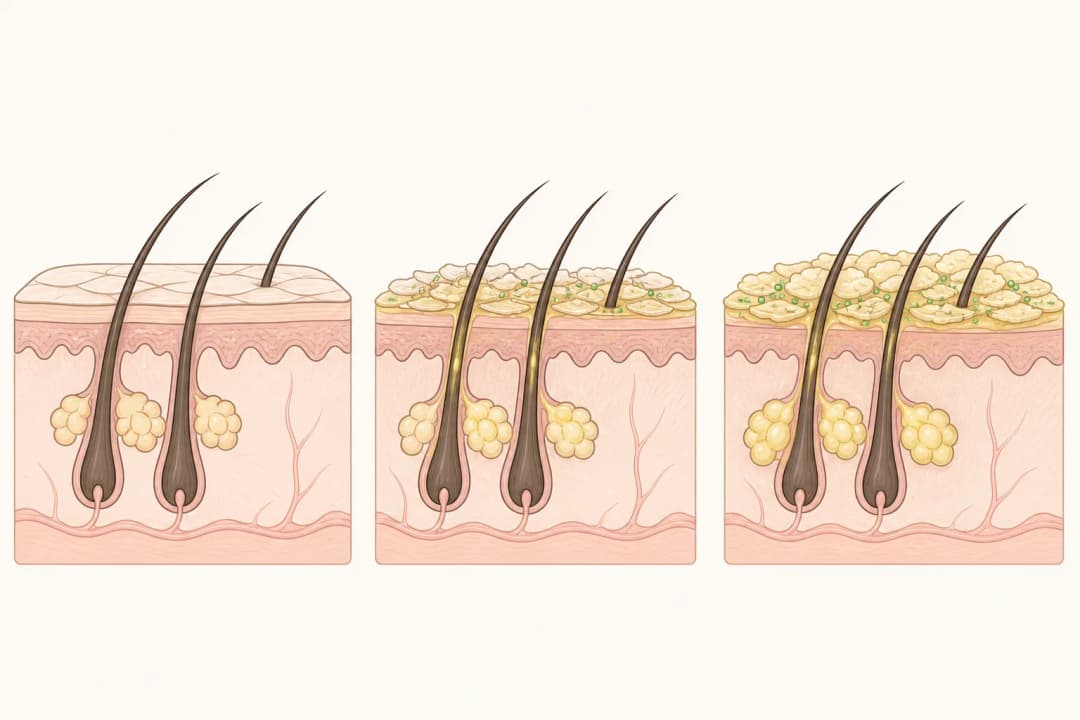
Typical cradle cap produces greasy or dry flakes with yellowish or pale scale. The skin beneath may look mildly pink, and the child is often otherwise comfortable. Marked itching, broken hairs, circular patches, swelling, weeping, or thick plaques are less typical and can point to another diagnosis.
Scaling around the eyebrows, behind the ears, or in skin folds can accompany seborrheic dermatitis. A clinician may examine the distribution and check whether scratching, infection, or another inflammatory skin condition is present.
Gentle care at home
Wash the scalp with a mild, fragrance-free baby shampoo and loosen softened flakes gently with a soft brush. Do not pick attached scale, because this can break the skin. A small amount of plain emollient may help soften stubborn scale; wash it out afterward and stop if irritation develops.
Avoid adult dandruff products, essential oils, and medicated creams unless a clinician recommends a product suitable for the child’s age and explains where and how to use it.
When your child needs medical care
Arrange an appointment if the scale persists despite gentle care, causes significant itching, spreads beyond usual areas, or comes with hair loss. Seek prompt care for increasing redness, warmth, tenderness, pus, crusting with fluid, fever, or a child who seems unwell. Rapid facial swelling or breathing difficulty needs emergency help.
Useful questions for the appointment
Ask whether the pattern still fits cradle cap, whether eczema or fungal infection needs consideration, which shampoo or topical treatment is appropriate for this age, and how long to try it before returning. Mention every product already applied and any change in sleep, scratching, hair, or feeding.
Find care
General Clinics & Polyclinics in Abu Dhabi
That answer is general. If you want it applied to your own case, these are licensed general clinics & polyclinics listed in Abu Dhabi.
27 Ar Ruwwad St - Shakhbout City - MSH4 - Abu Dhabi - United Arab Emirates
Accepts: Daman, Thiqa, Cigna, MetLife +20 more
Al Ruwais, Al Dhafrah
Accepts: Daman, Thiqa, AXA, Cigna +16 more
Al Bahyah - Al Bahyah Old - Abu Dhabi - United Arab Emirates
Accepts: Daman, Thiqa, Cigna, Allianz Care +18 more
Abu Dhabi
Accepts: Daman, Thiqa, AXA, Cigna +27 more
Ordered by verification status and how complete each clinic's public record is, then alphabetically. This is a directory listing, not a ranking — Zavis does not rate or recommend providers.
A factual listing drawn from the DHA, DOH and MOHAP licence registers. It is not a referral, an endorsement, or advice that any of these providers is right for you.
Questions people ask
Can cradle cap still occur at 18 months?
It can persist into toddlerhood, although a clinician should assess a stubborn or unusual-looking eruption to confirm the cause.
Should I scrape the flakes away?
No. Soften and brush loose flakes gently; scraping attached scale can injure the skin and invite infection.
Related
Related reading
Keep reading
Medical disclaimer. This page is general health information, not medical advice, and it cannot diagnose you. Always consult a licensed healthcare provider about your own symptoms and treatment. In an emergency in the UAE, call 998 for an ambulance.